


MuleSoft
Connect any system, any data, anywhere. API-led integration architecture with MuleSoft Anypoint Platform that eliminates silos and accelerates delivery.


The Integration Problem
The average enterprise runs over 1,000 applications. Only a fraction of them are integrated. The rest connect through point-to-point hacks, nightly batch exports, and manual data entry that creates delay, errors, and a team of people whose job is reconciling spreadsheets.
MuleSoft Anypoint Platform is the integration backbone that changes this. Digital Mass designs and builds API-led integration architectures that are maintainable, observable, and built to reuse.
What We Build
API-Led Connectivity Design
We architect your integration layer using MuleSoft's three-tier model: System APIs that abstract your core platforms, Process APIs that orchestrate business logic, and Experience APIs that surface data for each consuming application.
Salesforce Integration Hub
Bi-directional, real-time sync between Salesforce and ERP systems (SAP, NetSuite, Oracle EBS, Microsoft Dynamics), data warehouses (Snowflake, Databricks, BigQuery), and custom-built platforms.
Legacy System Modernization
We wrap legacy systems in modern, governed APIs, extending the life of your existing investments while enabling cloud-native experiences on top of them.
Healthcare Interoperability
HL7 FHIR-compliant integrations between EHR platforms (Epic, Cerner, Athenahealth) and Salesforce Health Cloud.
Anypoint Platform & Governance
Anypoint Exchange asset libraries, CI/CD pipelines for automated testing, API Manager for rate limiting, SLA tiers, and policy enforcement.
Event-Driven Architecture
Kafka, pub/sub, and real-time event processing to replace overnight batch processes with live data flows.
Common Pain Points We Solve
- "Every integration we build is a custom one-off that breaks when someone changes an endpoint."
- "Our Salesforce data is a day old because everything runs as a nightly batch."
- "We need to connect Salesforce to SAP but our IT team can't resource it."
- "We have 12 different point-to-point integrations and maintaining them is a full-time job."
- "Our EHR and Salesforce don't talk to each other."
Outcomes
- Integration build time drops when reusable API assets replace one-off custom connectors
- Data arrives in Salesforce in real time instead of overnight batches
- Legacy system retirement becomes feasible when APIs abstract the complexity
- Compliance teams gain auditability through centralized API governance
- New integrations ship in days, not months
Typical Engagement Phases
Sprint Zero & API Discovery: Integration requirements, existing point-to-point inventory, Anypoint Platform provisioning, API design standards, and prioritized backlog.
Core API Layer: System API development for primary platforms, first Process API orchestrations, and Anypoint Exchange asset library.
Integration Builds: Individual integration sprints delivering bi-directional real-time sync, event-driven flows, and legacy system API wrappers.
Platform Hardening: API monitoring and alerting, CI/CD pipeline setup, operations runbooks, and team enablement.
Technology
MuleSoft Anypoint Platform, Anypoint Exchange, Runtime Manager, API Manager, DataWeave 2.0, CloudHub 2.0, Runtime Fabric, SAP Connector, NetSuite Connector, Snowflake Connector, HL7 & FHIR support, Epic & Cerner Connectors, Kafka
Digital Mass is the best consulting partner I have worked with in my 20+ years of working in the Salesforce ecosystem. They are approachable, knowledgeable, innovative, and fun. The last 10 months working with them have been a game-changer for our business and my team.
Digital Mass is a truly collaborative partner, working in the trenches with us on a variety of projects. Their expertise seems to know no bounds, and regardless of the hurdle we come across, Digital Mass is at the ready with recommendations on how to ultimately work to get us back on course, no matter the storm.
Working with Digital Mass has been great. The staff is very responsive and eager to understand and deliver value. We have two consultants who have become integral members of our Scrum teams. They have helped raise the skill level of our internal staff. I would highly recommend working with Digital Mass!
Jeff's attention to detail, technical expertise, and calm nature make working with him very pleasurable. Everybody internal who works with him loves him. I could give him 6 stars if that were an option. Keep up the good work, as we are going to need more help in the future.
They came up with creative solutions to problems we experienced and helped guide our team, who were mostly new to Marketing Cloud. As we got closer to the deadline, the team went above and beyond to make sure we were successful.
Overall, we had an excellent experience. Their senior solutions lead's technical knowledge and management of the project was the key factor that led to a successful engagement.
While we were still maturing in Salesforce ecosystem, Digital Mass helped us manage within budget and helped us design solutions which exceeded our expectations.
Digital Mass was a game-changer for my Salesforce CRM team when we faced some tight deadlines that felt almost impossible. They are willing to just target your company's immediate need with augmented staff. I highly recommend Digital Mass for their targeted, effective solutions.
Latest on Mulesoft

Financial Services Cloud Implementation for a National Bank
One of the country's largest national banks had outgrown its Sales Cloud org. Digital Mass recommended and led a full migration to Financial Services Cloud, modernizing the relationship model, reducing code bloat, and integrating MuleSoft for the data management work.
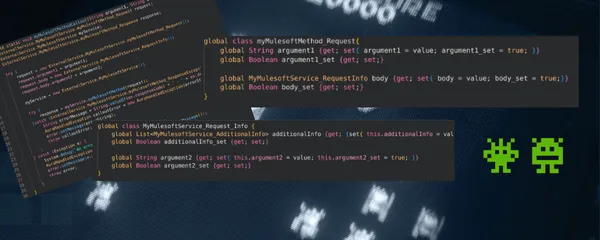
Mulesoft Service Implementation in Apex
Have you or your client’s Salesforce org recently made the switch to use Mulesoft for API Integrations? Are you having difficulty getting started implementing one of these RESTful services? If so, read on! Below is a short summary of how to use a Mulesoft Service in Apex code. It is not intended to


